No credit card required
 Thank you for your request. We will contact you shortly.
 Thank you for your request. We will contact you shortly.


Your Access Points Are Already a Hospital RTLS. Here’s How to Turn Them On for RTLS Asset Tracking.
Your Access Points Are Already a Hospital RTLS. Here's How to Turn Them On for RTLS Asset Tracking.
Walk into any large hospital and ask one question: Where is our infusion pump inventory right now? The answer, more often than not, is silence.
Not because the hospital doesn’t care. Not because the staff isn’t professional. But because tracking the real-time location of hundreds of mobile medical assets — infusion pumps, wheelchairs, IV poles, portable monitors, ECG devices — has historically required an infrastructure investment. That changes now. Because the infrastructure most hospitals need is already there. It’s been there for years. It’s in the ceiling of every corridor, every patient room, every operating theater.
It’s the BLE-enabled Wi-Fi access point.
What Wi-Fi Access Points Actually Do
Modern enterprise Wi-Fi access points are not just wireless routers. They are sophisticated radio devices capable of detecting, measuring, and reporting the signal characteristics of nearby Bluetooth Low Energy (BLE) beacons — including the small, battery-powered tags that can be attached to hospital assets.
Hospitals worldwide already use these access points for network management and, increasingly, for location services. But the vast majority of hospitals running Cisco or Aruba enterprise Wi-Fi have never activated the location layer — because no one told them they could.
How Wi-Fi Overlay RTLS Works
A small BLE-enabled tag — roughly the size of a credit card, with a five-year battery life — is attached to a mobile asset. The tag broadcasts a low-energy Bluetooth signal at regular intervals.
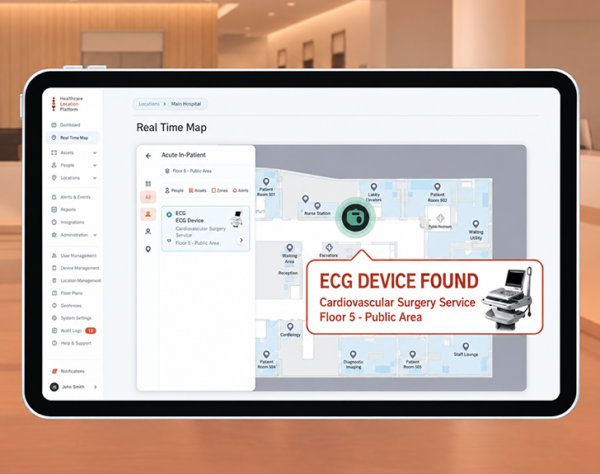
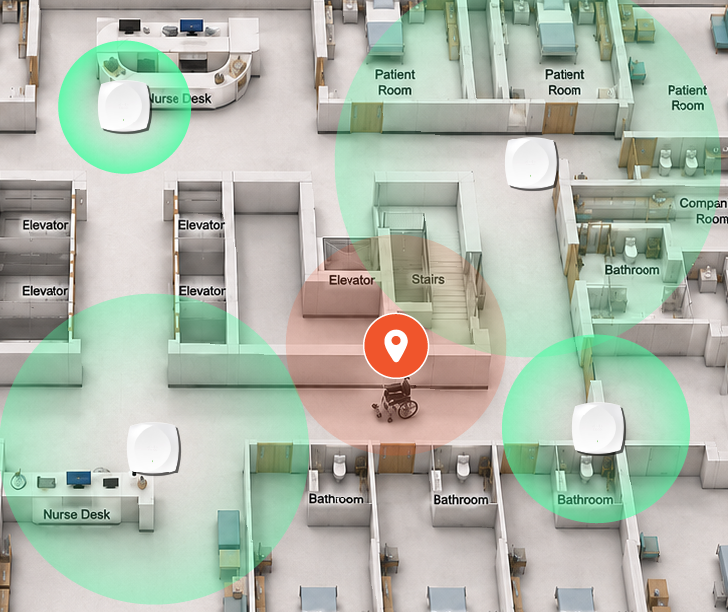
The hospital’s existing points detect this signal. They report it — along with signal strength data from multiple access points simultaneously — to the cloud platform. The platform triangulates the tag’s location and places the asset on a floor plan map in real time.
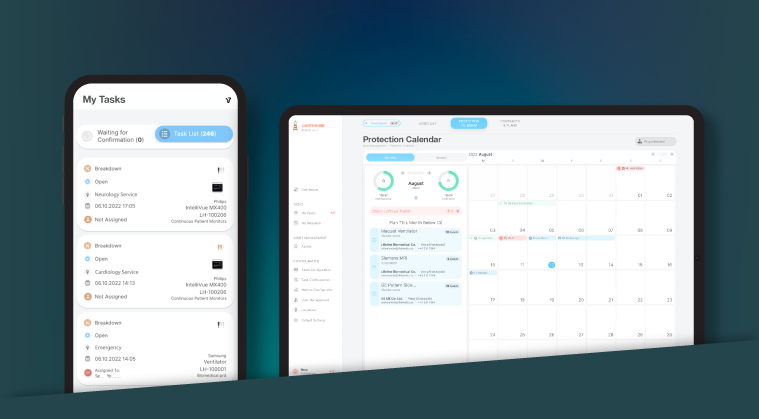
The clinical team sees a live dashboard. Every tagged asset appears as a dot on a map. Click on any asset and the system shows its current location,.
The entire system runs on infrastructure the hospital has already deployed, already configured, and already pays for.
Implementation, including onboarding and go-live, takes under 60 minutes. For hospitals already running Wi-Fi, the infrastructure requirement is already met — the only step remaining is turning it on.
What Becomes Possible-Hospital Asset Management and more.
Once live, the impact on hospital operations is immediate and measurable.
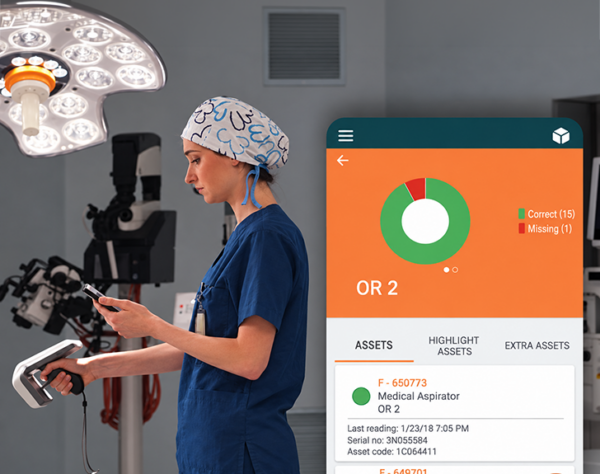
Asset location — real time. Every tagged asset is visible on a floor plan map, updated continuously. A nurse looking for an infusion pump types the asset type into the dashboard and sees every unit, its current location, and how long it has been stationary. What previously took significant time takes three seconds.
PAR-level monitoring — automated. Hospitals can define minimum inventory thresholds for any asset in any department or zone. When wheelchair inventory at the ED entrance drops below the configured threshold, the system automatically notifies the appropriate team. The right person is alerted before a patient ever has to wait. No manual counting. No clipboards. No daily walkrounds.
Maintenance and calibration tracking. Assets due for preventive maintenance or calibration can be located instantly. Biomed teams no longer need to search the facility for devices scheduled for service. The system shows where they are and how long they have been in their current location — enabling faster retrieval and more efficient maintenance workflows.
Utilization analytics. Over the pilot period, the platform generates utilization data for every tagged asset — how often it moves, how long it spends in each department, peak demand times, and idle periods. This data directly informs procurement decisions: before purchasing new equipment, operations teams can identify whether existing inventory is being deployed efficiently.
Early Access Now Open — The 90-Day Hospital RTLS Asset Tracking Program
Borda is currently offering early access to qualified hospitals before the official launch. The program is fully supported, at no charge, and requires no new hardware.
Each participating hospital receives:
- 20 pre-configured BLE asset tags with 5-year battery life — shipped to your facility
- Full access to the cloud dashboard — real-time map, utilization analytics, PAR-level alerts
- 30-minute remote onboarding call
- Dedicated Manager with weekly check-ins throughout the 90 days
- End-of-pilot ROI report with real utilization data
Apply at: Asset Tracking Pilot
If You'd Like to Go Beyond Asset Tracking
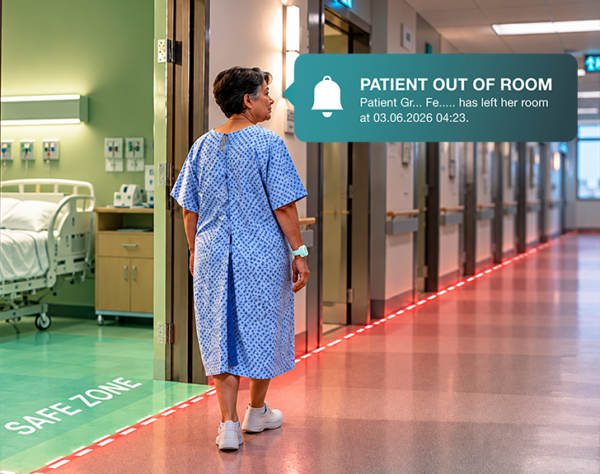
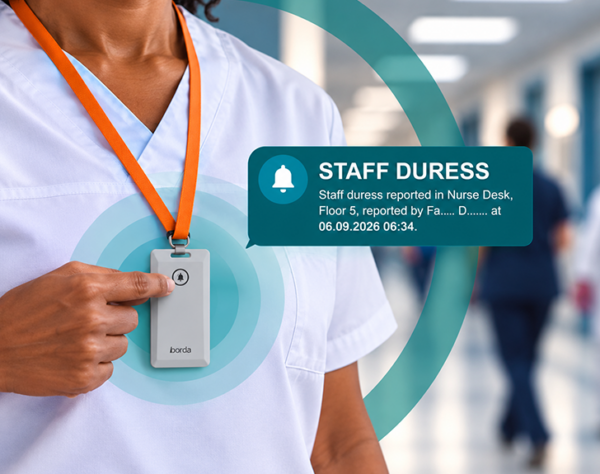
The same access point infrastructure that powers the 90-day pilot supports Borda Technology’s full platform. Pilot hospitals can expand to any of these use cases at any time such as staff duress and safety, patient wandering and safety, and more.
Early Access Before Official LaunchLimited Spots
The 90‑Day No Cost Pilot Program.
Hospital RTLS Asset Tracking with Your Access Points.
Zero new installations. No commitment. Ready within a week.
*By sending your information, you agree to our use of your data in accordance with our Privacy Policy.
26 August, 2026