No credit card required
 Thank you for your request. We will contact you shortly.
 Thank you for your request. We will contact you shortly.


What Is Healthcare Asset Management with Hospital RTLS?
What Is Healthcare Asset Management with Hospital RTLS?
Hospitals manage thousands of assets every day — infusion pumps, wheelchairs, monitoring devices, portable imaging assets. When any of these assets cannot be found, clinical workflows stall, staff productivity drops, and patient care suffers. This guide answers the most important questions about healthcare asset management, RTLS asset tracking, and how modern hospitals are solving their biggest operational challenges.
What Is Healthcare Asset Management?
Healthcare asset management is the process of tracking, monitoring, and maintaining all physical assets within a hospital or healthcare facility. A modern hospital asset management system combines real-time location tracking, utilization monitoring, and maintenance management into a single connected platform.
When powered by RTLS technology, healthcare asset management gives hospitals complete, continuous visibility into where every asset is, whether it is available, and how it is being used — across every department, floor, and wing of the facility.
What Is RTLS Asset Tracking in Healthcare?
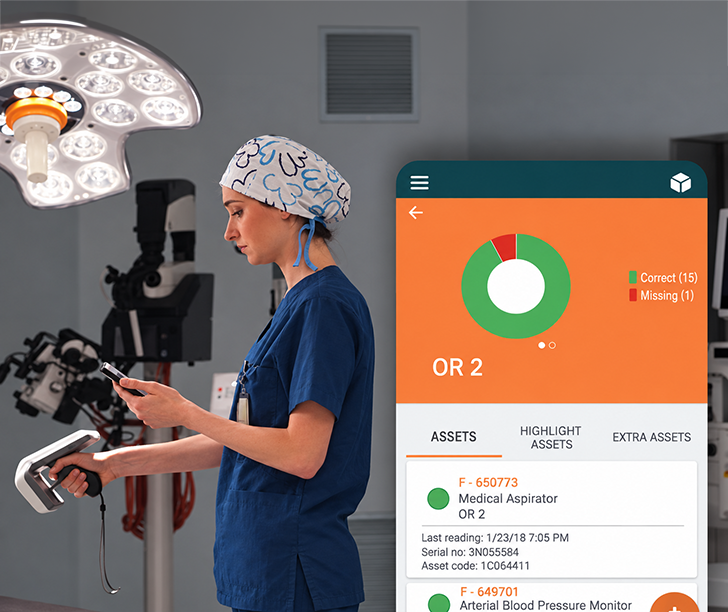
RTLS asset tracking is the use of Real-Time Location System technology to monitor the precise location and status of hospital assets in real time. Each asset is tagged with a small wireless device that communicates continuously with a network of sensors installed throughout the facility.
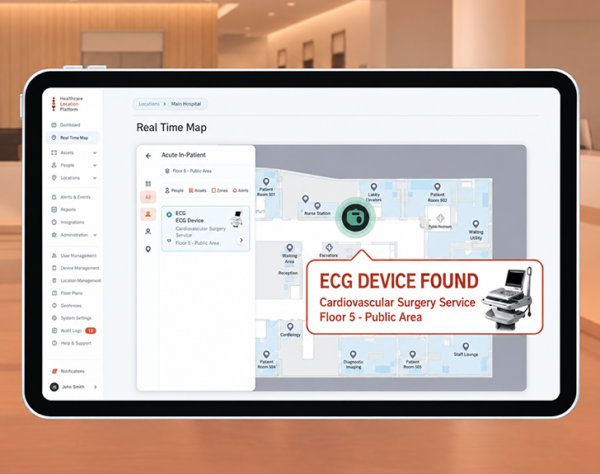
The result is a live, accurate map of every tracked asset — updated in real time, accessible from a central dashboard, and searchable by any staff member who needs to locate a specific asset instantly.
How Does RTLS Asset Tracking Work in a Hospital?
Hospital RTLS asset tracking works through three core components:
RTLS Asset Tags: Small, lightweight wireless tags attached to each asset. Tags transmit location signals continuously to the facility’s sensor network.
Sensor Infrastructure: A network of access points or anchors installed throughout the hospital that receive tag signals and calculate precise asset locations — down to the room level.
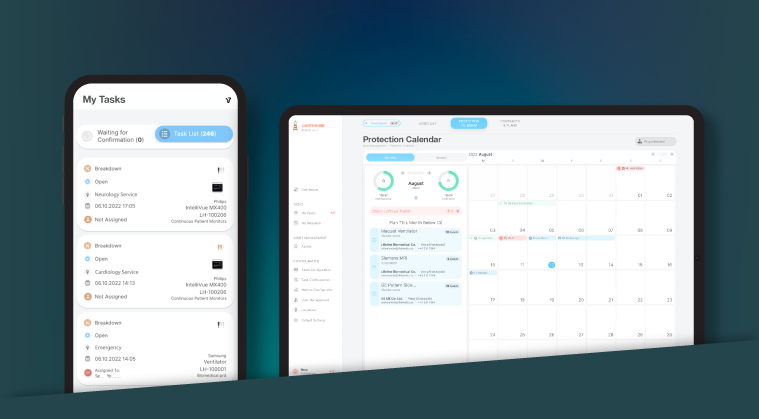
Software Platform: A centralized healthcare asset management software dashboard that displays real-time asset locations, availability status, utilization data, and maintenance schedules in a single interface.
Why Is Hospital Asset Tracking Important?
In most hospitals, the biggest asset problem is not a shortage of assets — it is the inability to find them when needed. IV pumps left in discharged patient rooms, wheelchairs abandoned in hallways, monitoring assets sitting idle in the wrong department.
These visibility gaps cause procedure delays, force staff to spend valuable time searching instead of caring, and drive unnecessary spending on rentals and duplicate purchases. Hospital asset tracking eliminates these problems by making every asset instantly locatable, at any time, from anywhere in the facility.
What Is the Difference Between Asset Tracking and Asset Utilization?
Asset tracking answers the question: where is this asset right now?
Asset utilization answers the question: how often is this asset actually being used, and is it being used efficiently?
Both are essential components of a complete healthcare asset management strategy. Tracking alone tells you where assets are. Utilization data tells you whether your asset inventory is appropriately sized, properly distributed across departments, and being used at the right capacity — so hospitals can make smarter procurement decisions and avoid both under-supply and over-investment.
What Is Healthcare Asset Management Software?
Healthcare asset management software is the platform that integrates real-time location data from RTLS asset tracking with utilization analytics, maintenance scheduling, and reporting tools — all in one system.
The best healthcare asset management software provides live asset location maps, availability status dashboards, utilization trend reports, automated maintenance alerts, and compliance documentation. It replaces manual spreadsheets, radio searches, and siloed department records with a single source of truth for the entire facility’s asset inventory.
How Does RTLS Asset Tracking Reduce Hospital Operating Costs?
RTLS asset tracking reduces hospital operating costs in several direct ways:
Eliminating unnecessary purchases: When hospitals can see exactly how many assets they have and how they are being used, they stop buying or renting assets they already own but cannot find.
Reducing asset loss and misplacement: Real-time location data ensures assets are returned to the right locations and flagged when they leave designated zones.
Improving staff productivity: Clinical staff spend significantly less time searching for assets and more time on patient care.
Extending asset lifespan: Integration with maintenance management systems ensures assets are serviced on schedule, reducing breakdowns and extending operational life.
What Types of Assets Are Tracked with Healthcare RTLS?
Healthcare RTLS asset tracking is used across a wide range of hospital asset categories:
Biomedical assets: Infusion pumps, ventilators, patient monitors, defibrillators, and other clinical devices.
Mobility assets: Wheelchairs, stretchers, beds, and transport assets.
Diagnostic assets: Portable imaging devices, ultrasound machines, and point-of-care testing assets.
Facility assets: Crash carts, IV poles, and support assets used across departments.
How Does RTLS Asset Tracking Improve Patient Care?
The connection between asset availability and patient care is direct. When clinical staff can locate the right asset instantly, procedures start on time, workflows run smoothly, and patients experience fewer delays.
Hospitals that implement RTLS for healthcare asset tracking report measurable improvements in care delivery efficiency — not because they added more assets, but because they made better use of the assets they already had.
What Should Hospitals Look for in an RTLS Asset Tracking System?
When evaluating RTLS for healthcare asset management, hospitals should prioritize:
Location accuracy: Room-level precision across all floors and departments, including high-density clinical areas.
Real-time visibility: Live asset maps that update continuously, not on a delay.
Scalability: A system that can grow with the facility — from a single department to a multi-building campus.
Software integration: Compatibility with existing hospital systems including maintenance management platforms.
Reporting and analytics: Utilization dashboards, availability trends, and exportable compliance reports.
Ready to Take Control of Your Hospital Assets?
Full visibility starts with the right RTLS asset tracking foundation. If your hospital is ready to eliminate asset loss, reduce operational costs, and give clinical staff the tools they need to work efficiently, now is the time to explore what modern healthcare asset management can deliver.
👉 Request a demo now: https://bordatech.com/demo-request
Early Access Before Official LaunchLimited Spots
The 90‑Day No Cost Pilot Program.
Hospital RTLS Asset Tracking with Your Access Points.
Zero new installations. No commitment. Ready within a week.
*By sending your information, you agree to our use of your data in accordance with our Privacy Policy.
23 September, 2026