No credit card required
 Thank you for your request. We will contact you shortly.


Saving Hospital Staff Time for Better Patient Care Through Healthcare RTLS
Saving Hospital Staff Time for Better Patient Care
Through Healthcare RTLS
Saving Hospital Staff Time for Better Patient Care Through Healthcare RTLS
Time is one of healthcare’s most critical resources—yet it’s also the one most often lost to inefficiency. Every moment a nurse spends searching for an asset, every delay in task coordination, and every gap in safety adds up—not just in operational cost, but in the quality and timeliness of care. RTLS (Real-Time Location Systems) helps hospitals reclaim that lost time.
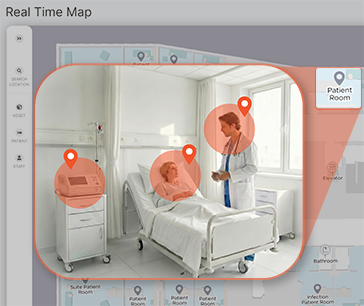
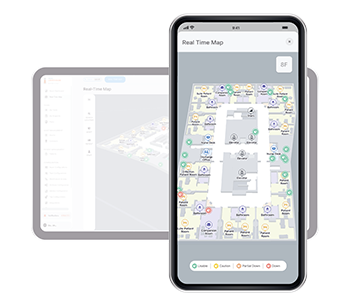
Hospital RTLS technology leverages IoT-enabled sensors, wearable tags, and intelligent software to give hospitals a live, interactive view of their staff, patients, assets, and workflows. But it does more than just track locations—RTLS acts as the hospital’s digital eye, continuously monitoring activity, identifying bottlenecks, and enabling faster, smarter decisions. This real-time visibility transforms daily operations, helping healthcare teams deliver care that’s not only more efficient, but also safer and more coordinated.
Ready to see where your lost minutes are hiding? Let’s dive into the everyday hospital operations RTLS transforms—from asset hunts and patient wandering to nurse-call response and task coordination.
Stop Searching for Assets with RTLS Asset Tracking
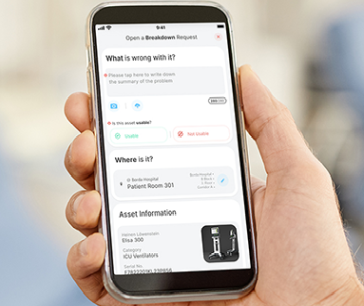
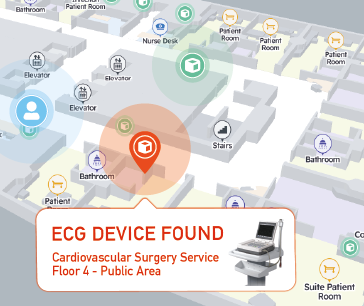
Access to the right asset at the right time can make all the difference in patient care. RTLS-powered Asset Utilization solution provides real-time visibility into the asset location, availability, and condition of critical medical assets—like infusion pumps, wheelchairs, or mobile monitors. Instead of searching or making unnecessary calls, staff can instantly locate the nearest functional asset and check its status. This real-time visibility reduces delays, minimizes frustration, and prevents unnecessary purchases of assets that are already on-site but hard to find.
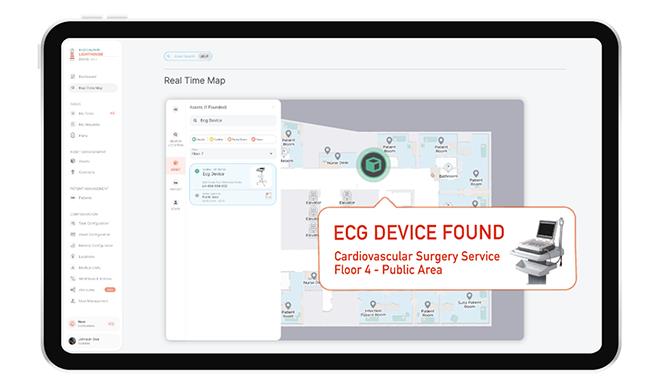
Nurses spend up to 30% of their time searching for medical equipment¹, which not only impacts operational efficiency but also delays care delivery. Moreover, an average asset in a hospital remains underutilized for more than 50% of its lifespan², indicating a serious inefficiency in asset management. In the world’s third largest hospital, Ankara City Hospital, with a bed capacity of over 3,700, the time wasted searching for mobile assets was reduced by 94% through the implementation of hospital RTLS technology. This outcome demonstrates how real-time asset visibility can dramatically enhance operational efficiency and care responsiveness—even in the most complex and high-volume healthcare environments.
By eliminating manual tracking, RTLS saves valuable staff time and enables them to focus more on what matters most—delivering timely, high-quality patient care.
Less Time Watching: How RTLS Prevents Wandering & Ensure Patient Safety
In high-pressure healthcare settings, time is one of the most limited and valuable resources. Traditional patient monitoring—especially for those at risk of wandering—often requires constant manual checks and physical supervision, pulling clinical staff away from critical care duties. With Patient Wandering & Safety product powered by RTLS (Real-Time Location System) technology, transforms this challenge by automating monitoring and enabling real-time alerts. With virtual boundaries (geofencing) in place, care teams receive instant notifications when a patient approaches restricted areas or exits a designated safe zone. This proactive alerting system allows immediate intervention, without the need to watch every movement manually.
By reducing time spent on routine surveillance, RTLS frees up nurses and caregivers to focus on higher-value clinical tasks—improving both patient care and staff efficiency. A centralized dashboard keeps the entire care team aligned with real-time location data, making faster decisions possible and streamlining workflows across the unit.
In short, RTLS not only enhances patient safety but also gives valuable time back to your healthcare staff—time that can be used where it matters most.

To further enhance staff responsiveness, the solution seamlessly integrates with the hospital’s Nurse Call system. Patients can request immediate assistance 24/7 by pressing a button on their Patient Tag. This triggers an instant alert—delivered directly to nurses—along with the patient’s real-time location. This eliminates time lost in locating the patient or verifying room numbers, allowing the care team to respond faster and more accurately.
By embedding RTLS technology directly into existing clinical workflows, this integration significantly reduces delays, shortens response times, and frees up staff from manual coordination. As a result, caregivers can spend less time on logistics and more time delivering timely, hands-on patient care.
Automating Tasks, Accelerating Care
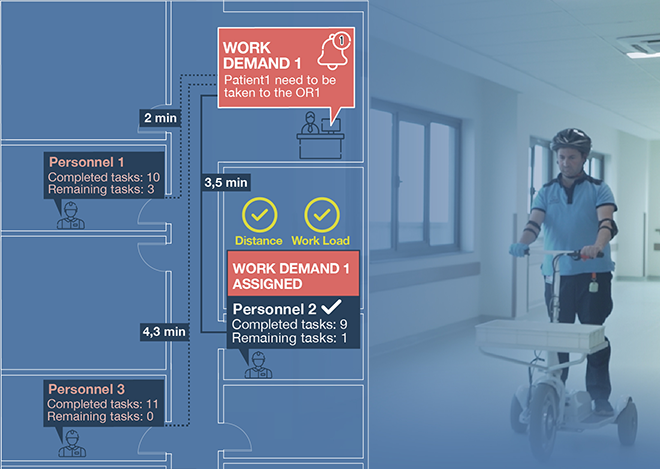
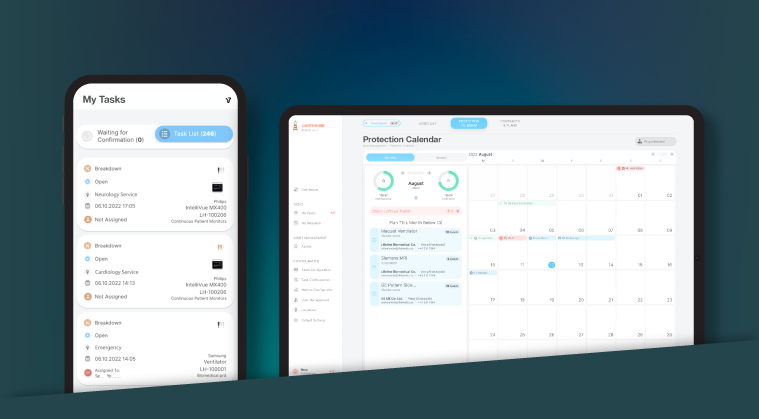
Manual task coordination remains one of the most significant hidden time drains in hospital operations. From porters to technicians, staff often lose valuable minutes—sometimes hours—navigating inefficient communication and follow-ups. RTLS-powered Work Demand Management eliminates these inefficiencies by automatically assigning tasks to the most suitable staff based on real-time location, availability, and current workload. By ensuring the right person is dispatched at the right time—whether it’s a porter for patient transport or a technician for asset delivery—this system reduces delays and minimizes idle time. Tasks are completed faster, with fewer resources, and without the need for constant manual follow-up. Mobile integration empowers staff to view, accept, and manage tasks on the go, boosting productivity even while in motion. As a result: Fewer delays, less idle time, faster task completion, reduced burden on coordinators and supervisors. Most importantly, by removing inefficiencies, staff gain more time to focus on direct patient care—where their presence makes the biggest difference.
In conclusion, in a healthcare environment where every second can impact outcomes, RTLS ensures that no moment is lost to inefficiency. By streamlining critical workflows—from locating assets and preventing patient wandering to automating task coordination—RTLS enables hospitals to reduce delays, ease staff burden, and enhance patient safety. But more than just saving time, it amplifies the quality of care by giving clinical teams the freedom to focus on what truly matters: their patients. In doing so, RTLS doesn’t just improve operations—it transforms the care experience for everyone involved.
June 30, 2025







 Thank you for your request. We will contact you shortly.