No credit card required
 Thank you for your request. We will contact you shortly.


Operational Efficiency and Safety with Hospital RTLS: Real-Time Visibility for Assets, Patients, and Staff
Operational Efficiency and Safety with Hospital RTLS:
Real-Time Visibility for Assets, Patients, and Staff
Operational Efficiency and Safety with Hospital RTLS: Real-Time Visibility for Assets, Patients, and Staff
Hospitals operate in highly dynamic environments where assets move constantly, patient needs change by the minute, and staff must respond quickly to both routine tasks and unexpected events. When visibility into any of these areas is limited, whether it involves locating essential assets, coordinating discharge tasks, or ensuring staff safety—delays and inefficiencies can accumulate rapidly. These challenges directly affect patient flow, resource availability, and overall operational performance.
Hospital RTLS (Real-Time Location Systems) provides this layer of visibility by offering real-time location data, automated status updates, and workflow transparency. By delivering real-time insight into asset movement, discharge-related tasks, and staff duress events, the system helps hospitals minimize delays, prioritize resources, and maintain safe, coordinated operations across departments.
Enhancing Asset Availability and Search Time through Real-Time Asset Tracking
A 36-hospital time-and-motion study found that nurses spend only 19.3% of their time on direct patient care, with much of the remaining time consumed by walking, searching, and retrieving assets. This makes real-time access to asset locations essential for supporting clinical efficiency and reducing avoidable delays in care delivery.
Mobile and critical assets (i.e. infusion pumps, portable monitors, ventilators, wheelchairs) naturally move across multiple departments throughout the day. Without a clear view of where they are and how often they are used, hospitals face a set of recurring challenges:
- Hospital staff spend time searching for assets instead of focusing on patient care
- Assets sit idle in corridors, side rooms, or storage areas
- Additional units are purchased or rented “just in case”
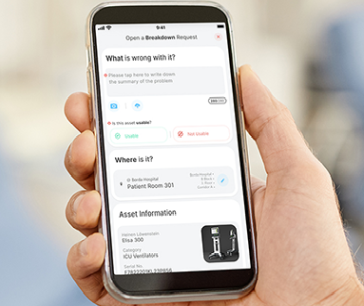
- Maintenance and battery issues are only noticed at the point of care
According to National Health Services (NHS) Digital, lack of real-time asset visibility leads to significant search time, misplaced devices, and unnecessary rental or purchasing costs across UK hospitals The same report indicates that nurses may spend the equivalent of 40 hours per month searching for equipment — a clear reflection of how deeply these inefficiencies impact clinical workflows. (NHS Digital, 2023) These operational inefficiencies reinforce the importance of having a reliable system that provides up-to-date information on where assets are, how they move, and how often they are used.
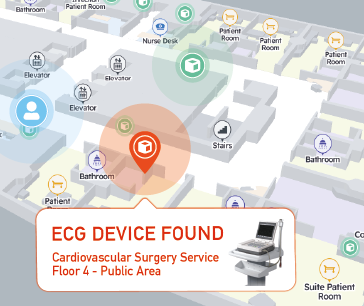
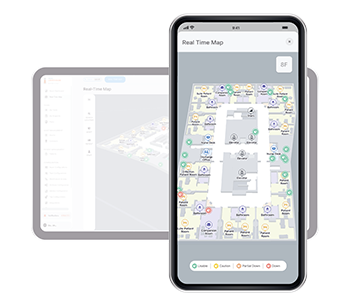
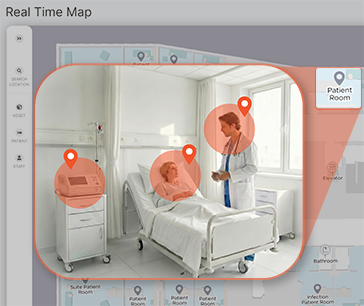
Healhcare RTLS brings structure to this movement. With real-time maps that display the live location of every tagged asset, staff can instantly see where items are across the facility without relying on guesswork or internal calls. Assets can be found and retrieved within minutes, and their movement and utilization patterns become clear over time. This Asset Utilization solution via RTLS asset tracking allows hospitals to maintain an asset inventory that truly reflects operational demand and ensures that critical assets are available where they are needed most.
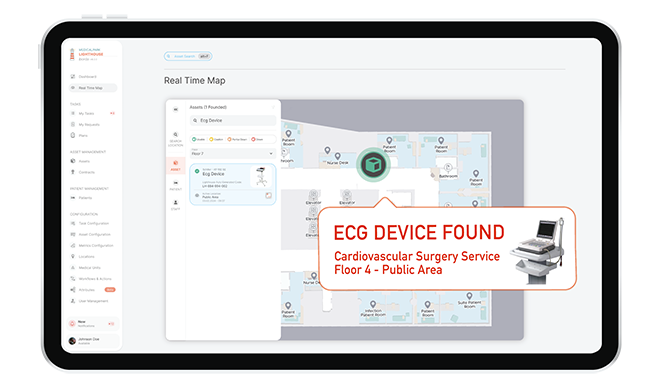
Beyond locating assets, RTLS utilization analytics provide a clearer picture of how assets are used throughout the day. Trends showing which devices remain idle and which are routinely in short supply enable hospitals to rebalance inventory across wards, reduce avoidable rentals, and prevent unnecessary purchases. This evidence-based approach ensures that asset levels reflect real operational demand rather than assumptions, strengthening both budgeting decisions and day-to-day care delivery. Asset utilization analytics help decision makers identify under-utilized assets, relocate to places in need of and prevent unnecessary purchases.
Behind this visibility is a location engine that uses the hospital’s existing Wi-Fi Access Points. Access Points equipped with BLE capabilities can detect signals from RTLS tags and forward this information to the system, enabling real-time positioning without requiring dedicated new infrastructure. This approach reduces deployment time, lowers installation cost, and allows hospitals to scale their RTLS capabilities using infrastructure already in place.
Supporting Faster and More Predictable Patient Discharge Workflows
A patient discharge often depends on several coordinated steps happening in the right order. Any delay — whether caused by missing assets, incomplete room turnover, or communication gaps — slows the entire sequence and disrupts overall patient flow. Even small bottlenecks at this stage can create a ripple effect across wards, limit available capacity, and prolong waiting times for incoming patients.
Across the UK, delays in preparing beds, arranging transport, or completing administrative steps contribute to annual discharge-related costs exceeding £800 million (National Audit Office, 2022). These pressures make it essential for hospitals to improve real-time awareness across the entire discharge pathway.
Common issues include:
- A wheelchair not being available when a patient is ready to leave
- A bed not being marked as vacant and ready for cleaning
- Cleaning teams not being notified when a bed becomes free
- Transport tasks being requested but not clearly tracked
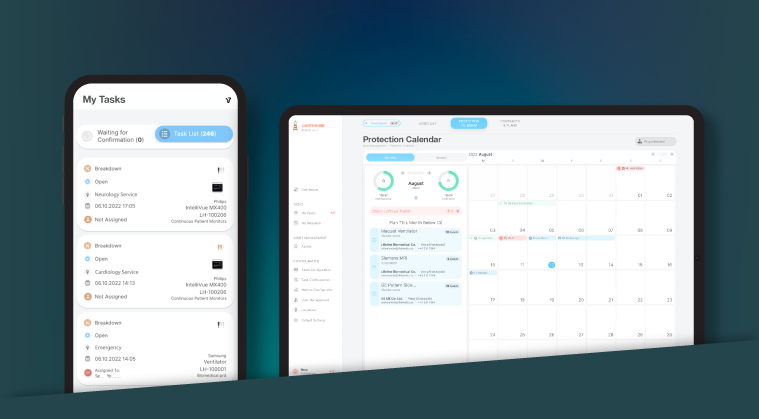
Hospital RTLS helps bring clarity to discharge-related steps by providing real-time visibility into how workflows progress throughout the day. Through centralized dashboards, teams can follow room status, patient transitions, and task completion without relying on manual updates or internal calls. This transparency enables bed management teams to anticipate availability, prioritize tasks, and maintain smoother patient flow—reducing the likelihood of extended waits for incoming admissions.
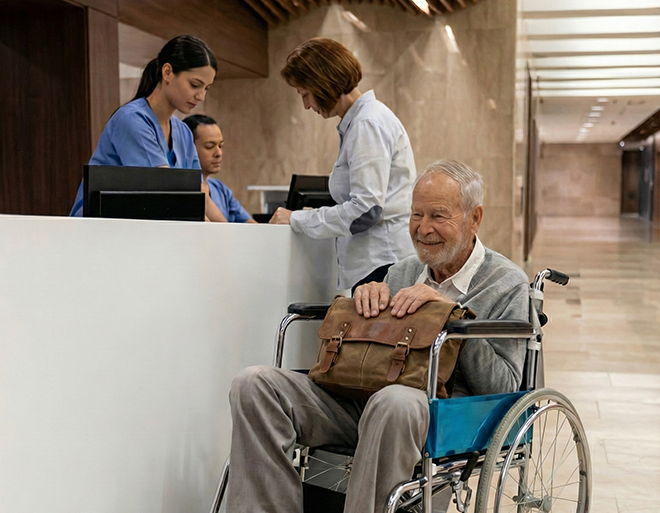
Once clinical care is complete, updates triggered by changes in the status or removal of RTLS-enabled patient tags can can automatically notify the hospital information system (HIS), allowing the discharge process to advance without delay. At this stage, Healthcare RTLS also enables automated workflows that eliminate common bottlenecks in the discharge pathway. For example, when a patient is clinically cleared for discharge, HIS integration can automatically generate a porter’s task—such as dispatching a wheelchair to the ward. As soon as the patient leaves the room, Hospital RTLS detects the vacancy and instantly sends a cleaning request to housekeeping, removing the need for manual calls. After cleaning is completed, the room status updates automatically, notifying clinical teams that the bed is ready for the next admission and improving overall bed turnaround time.
By giving teams accurate insight into who is where, which rooms are ready, and which tasks have been completed—and by ensuring each step triggers the next through automated workflows—Healthcare RTLS reduces the risk of room-assignment errors, decreases operational friction, and keeps patient flow moving without unnecessary interruptions. The result is a discharge process that is faster, safer, more predictable, and fully aligned with modern workflow automation standards in hospitals.
Ensuring 24/7 Staff Safety and Duress throughout the Hospital
Staff safety is an essential component of hospital operations, particularly in high-pressure environments such as emergency departments, behavioral health units, and isolated clinical areas. Healthcare workers routinely encounter situations where they need immediate assistance, and delays in response time can impact both staff wellbeing and patient care.
According to the Occupational Safety and Health Administration (OSHA), nearly three-quarters of all workplace assaults in the United States occur in healthcare settings,a reminder of how critical reliable staff duress systems are for ensuring timely and coordinated responses when help is needed.
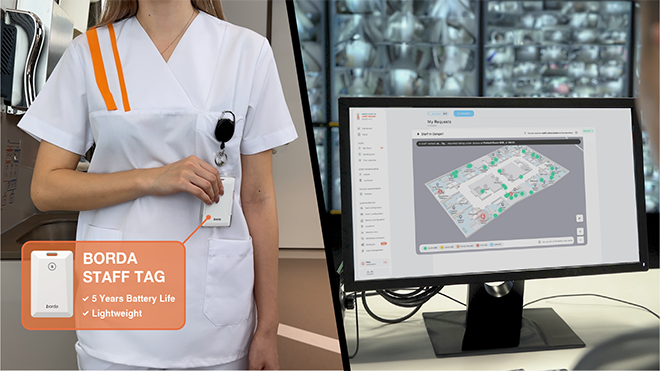
Hospital RTLS supports safer working environments by enabling rapid and coordinated responses to duress events. With a single press of the panic button on RTLS-enabled staff tags—designed with a battery life of up to five years—a white code alert is instantly triggered and transmitted to security personnel. The Staff Safety & Duress system immediately provides the staff member’s precise real-time location, security can see real-time location of staff instantly, reducing response time when seconds matter. Thus, enabling a fast, accurate, and coordinated response without confusion or delay.
Hospital RTLS gives hospitals the real-time awareness they need to keep operations moving smoothly. By making assets easy to find, discharge steps easier to coordinate, and staff safer during critical moments, RTLS removes the hidden delays that slow down care. The result is a more efficient, responsive, and safer hospital—one where teams spend less time searching, waiting, or reacting, and more time delivering high-quality patient care.
December 04, 2025







 Thank you for your request. We will contact you shortly.